


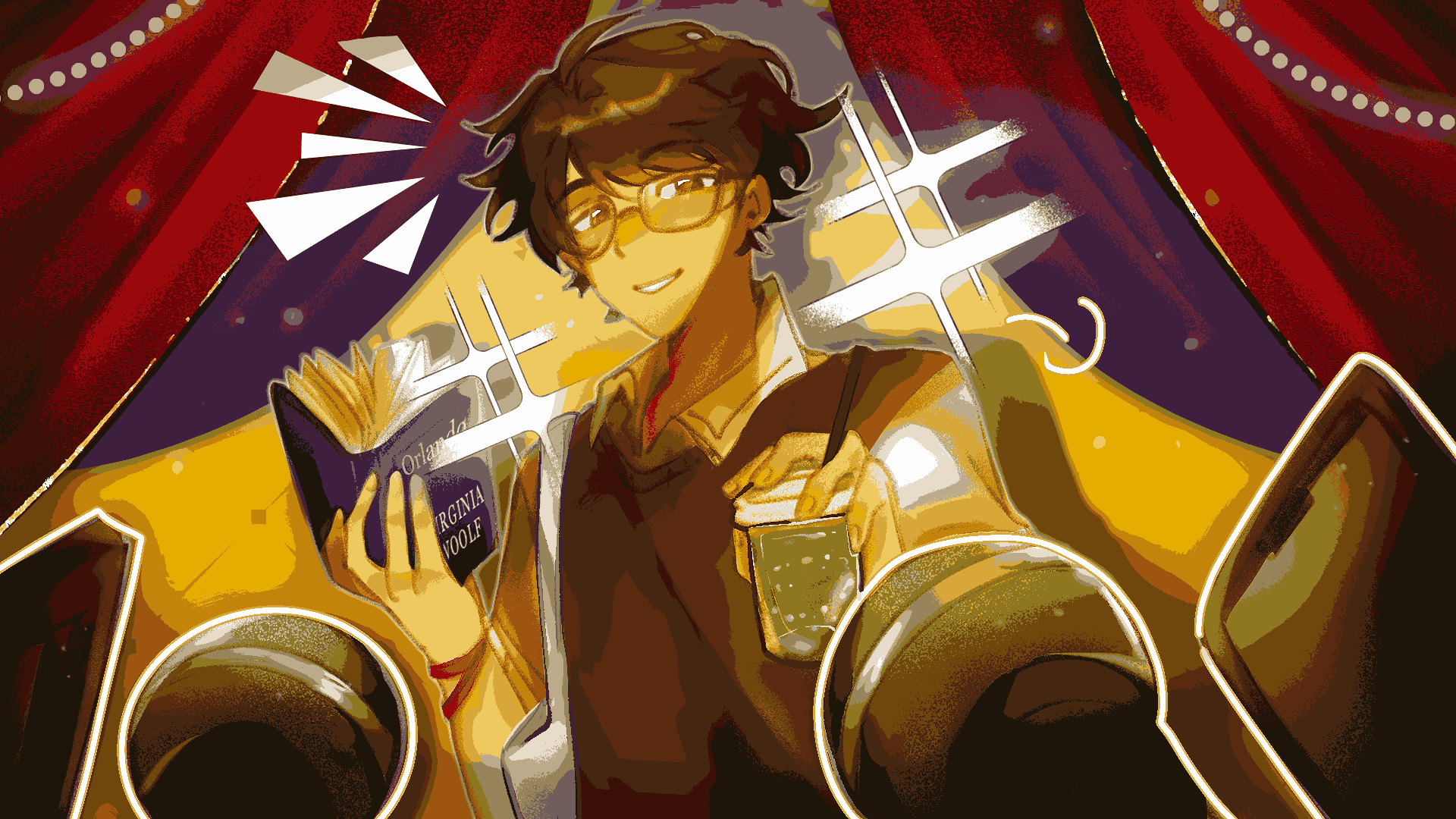
Defying Manila heat in a quarter-zip and a canvas tote in tow, they clutch a matcha latte in one hand and feminist literature on the other with practiced ease. “Ako lang ba ‘yung esoteric indie boy na nakikinig kay Ethel Cain?” Sol exclaims, meticulously adjusting his book to catch the light and angle for a perfect Instagram story. Far from an exception, people like Sol are the latest iteration of a culture that performs rather than enjoys.
(Am I the only esoteric indie boy that listens to Ethel Cain?)
This hyperawareness of being perceived did not appear overnight; it is the natural endpoint of an internet culture obsessed with the “niche.” What started with the classic “I’m not like other girls,” a clumsy attempt to carve out an identity by rejecting the mainstream, it soon morphed into the “me checking that I don’t fit in” mindset, rebranding social alienation into a high-fashion accessory.
Ebony, a self-proclaimed goffik vampire witch, expressed how every action is “performed to an invisible audience.” Hobbies are flattened into internet aesthetics, while music taste is gatekept like a state secret to preserve cultural superiority. True enjoyment no longer matters—it’s about broadcasting it to the world. Yet while these personalities are dismissed as “cringe,” their existence hints at something deeper. Behind the grainy photos, carefully tousled hair, and wired earphones lies an existential question: why try so hard to stand out?
Portrait of an esoteric on fire
One can find Juan Magkaiba, or Rémy as he prefers, sketching and sipping matcha at a neighborhood café, tote bag stacked with manuscripts, and an annotated copy of Murakami’s Norwegian Wood peeking out. Upon introduction, he shares that he is still feeling “spiritually refreshed” from an underground gig in Cubao, though he declines to name the artist to protect the sanctity of the experience. But beneath the film references and a cluster of niche pins lining his camera lanyard lies an interior life that insists on being singular, whimsical, and in permanent emotional retrograde.
A self-proclaimed part-time poet from Quezon City, Rémy says his means of expression is a necessary and natural response to the world around him. “I think I just got tired of things that feel too basic,” he says, adjusting a silver ring beside a film camera with no roll. “Like when something starts feeling too named, I get magnetized to what has a little dust on it.” His playlists have titles like “Somber Longing” and “Cigarettes and coffee.” His latest Letterboxd review on a European film describes it as “an exquisitely restrained meditation on feminine ruin and post-industrial longing.”
His “thrifted” leather jacket and faded vintage tee from Salcedo, as well as niche personality, convey what their suspiciously visible tarot deck cannot. “People confuse novelty with cringe,” he claims. It may look painfully curated, but it also gives shape to a self that feels too odd, too porous, too retrograde-pilled to leave unframed. “Sorry if my coping mechanism has a font. C’est la vie,” he expresses, punctuating each syllable with an Italian finger-pursing gesture.
Freedom in the whimsical
Amid its trendiness, authenticity has become a paradox. Ebony questions, “Who defines what is performative? If I am happy, why can I not be free?” We choose our interests based on what feels “cool” and “socially acceptable.” Maybe our niches are merely fleeting passions, waiting to be replaced by the next one. But by that logic, we emerge as a mosaic of borrowed identities, finding freedom in the whimsical.
Rémy reflects on how the mainstream notion of “performativism” caused them to question their own identity. Their individuality is often dismissed as purely a facade for liking Noah Kahan and finding happiness in the corners of Cubao Expo. However, they also note that, “Once you drown out external voices declaring who you should be, that is when you [become truly] free.” Whether it may be in between the pages of Virginia Woolf or at the bottom of a tarot deck, to be performative is to discover one’s identity.
“When I walk on the streets, there are looks of judgment,” Ebony laments, as their alternative lifestyle is not understood by everyone. But despite random eyes glued to their crystal rings and dental fangs, they believe that you are the main character of your own life.
The show must go on!
No matter what others may think, one thing is certain: people can decide how they want to live their lives. “I think there’s something exhilarating about being so incredibly, stubbornly unapologetically yourself,” Ebony shares. It’s a pure form of individuality that is often lost in the pursuit of what others consider conventional. Whether it’s enjoying a single cultivar matcha-fueled study sesh, or letting bone readings decide which major to drop, they’ve found ways to show the world who they really are, even in the face of judgmental gazes and exasperated sighs.
While not everyone is a niche esoteric free thinker, there’s always something that makes being ourselves special. “We’re such unique creatures, it’s [really] a waste trying to be somebody else,” Ebony expresses. Finding something all to yourself is something that, to them, is worth all the jokes and the mockery. “It’s kinda ironic,” Sol says, “they call me performative, but aren’t we all doing some kind of performance?”
When life is a performance, we should not settle for being extras in our own stories. If the world wants you to be like everybody else, it’s up to you to insist upon yourself.