


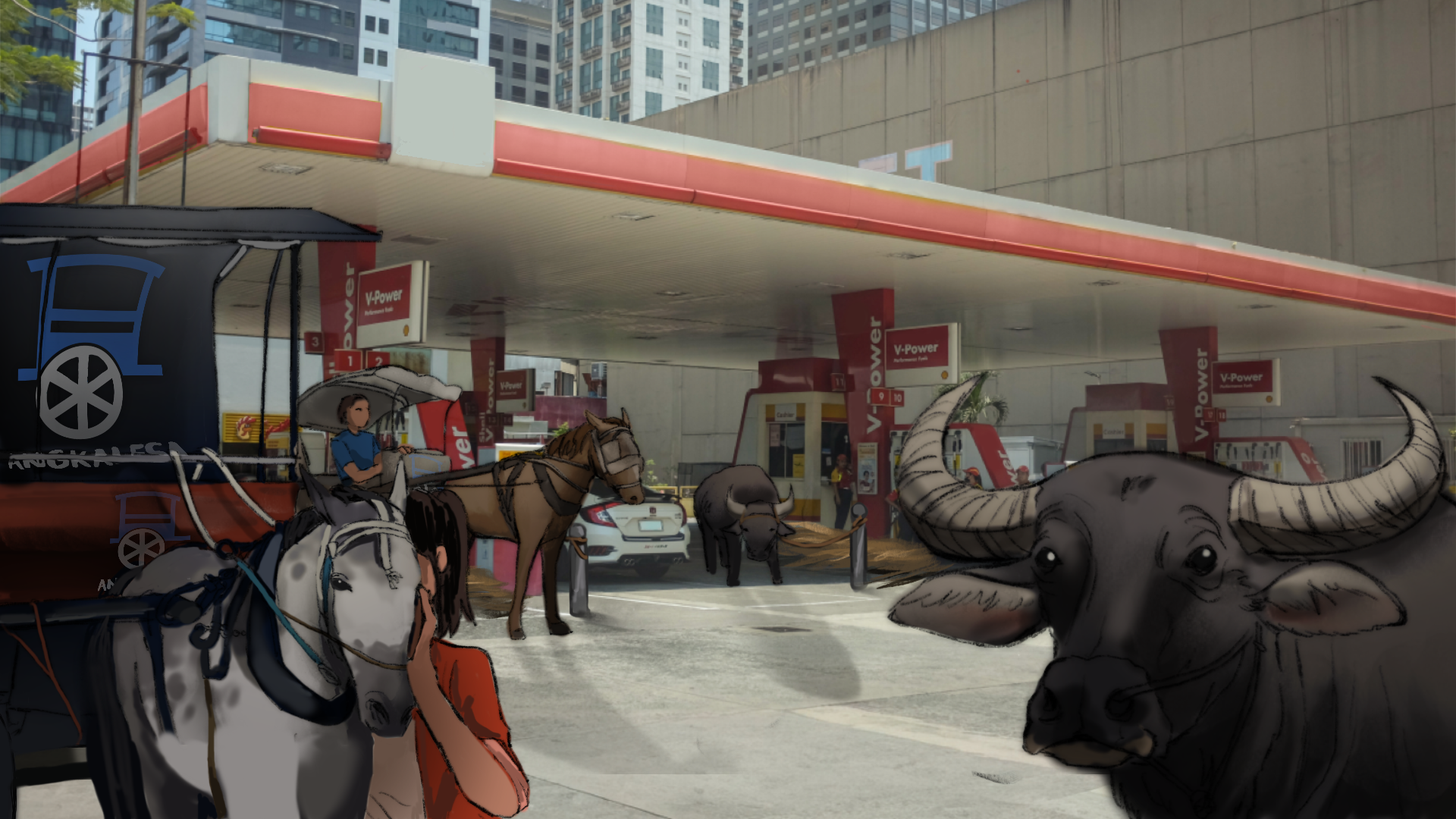
With fuel prices soaring nationwide, Lasallians and self-proclaimed Taft hacienderos have resorted to alternative forms of transportation, abandoning their cars in favor of horses and carabaos, which are spotted trotting down the old Taft Ave. road during rush hour.
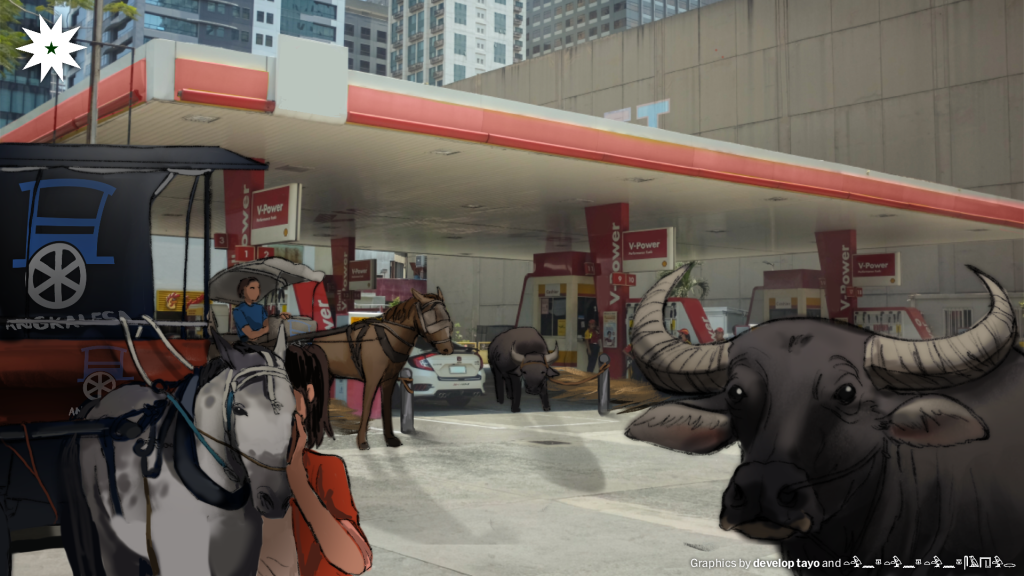
Why is everything so expensive?
Gas prices drastically surged in early March after the United States and Israel began striking locations around Iran. Since tensions came to a head, unleaded and diesel, previously priced at around 55 pesos, soared to the high 80s for unleaded and 100 for diesel, making spontaneous Tagaytay trips more expensive for the average Lasallian.
As transportation becomes increasingly inaccessible, public and private institutions have taken steps to address this. Schools and universities have begun exploring alternate hybrid forms of learning, government offices’ working days have been cut down in favor of work-from-home setups, and fuel subsidies have been proposed to help the transportation sector stay afloat. Despite these measures, people still need to move around.
The most underrated way to save money
Many Lasallians have begun exploring practical alternatives such as carpooling, commuting, and biking to campus. Several students reported that splitting Grab fares, taking the train, and even walking under the unforgiving Manila heat, Chinito Walkers-style, have become necessary sacrifices in these trying times.
However, some students claim that the real solution has been overlooked all along. Inspired by the viral “life hack” Tiktok video suggesting commuters take the LRT to beat Manila traffic, a number of Taft hacienderos have now suggested what they call the most underrated way to save money: horseback riding.
Ride-hailing apps are also keeping up with the new trend. A new beta feature on Grab reportedly allows users to book a “GrabKabayo” and “GrabCarabao” with options like “economy trot” and “surge pricing during stampedes.” However, the app recently crashed due to “unexpected hay demand.” For more comfortable options, Angkas has also released a beta feature, “AngKalesa,” that allows groups to opt out of gas transport.
Witnesses along Taft Ave. reported unusual yet confident scenes of students arriving on horses, carabaos, and one highly unbothered donkey, insisting that the method is not only fuel-efficient but also “emotionally grounding.” Jim Balasbas (MMIX, AB-POM) “Bro, pare, commuting? Sure, it saves money, pero riding a horse? That’s aura, legit aura pare, like you’re the main character of Taft Ave. pare,” explained. He added that traveling by livestock not only saves gas but also dignity, noting that “only the brave can actually yeehaw through Manila traffic.”
University officials have yet to release a statement, but Buildings and Grounds Management Office personnel were last seen planting grass seeds on the Football Field Memorial Marker and installing what appeared to be a temporary hitching post near the North Gate.
Unleaded or unleashed?
“I hate traffic,” according to Mhigel Oishi, former sedan now carabao owner. “But at least now, my ride eats grass instead of my allowance.”
Commuters were initially alarmed when a herd of horses and carabaos merged onto Taft Ave. during rush hour, ignoring traffic lights but strictly obeying snack breaks. The Metropolitan Manila Development Authority (MMDA) has since issued temporary guidelines, while Manila Mayor Missko Nasya has made no announcement but has posted multiple Facebook updates regarding the phenomenon. The MMDA has implemented “No U-Turn on Carabao” and “Yield to Anything With Hooves” signs along main roads in Manila affected by the influx of this new form of transportation. Although knowing Taft Ave., the reeking odor from the horses would not add much to its charm.
Public transportation has also adapted. With jeepney operators facing fare pressures, some routes now offer a premium organic experience where passengers can be pulled by horses at a slightly higher rate—P20, or one bundle of kangkong.
“I feel closer to nature,” according to Isahbellah (II, CS-ST) from the College of Computer Studies, who arrived on campus on a horse. “I also feel closer to a failure due to absence in my 7:30 am class.”
Authorities continue to monitor the situation as oil prices remain volatile, leaving many to wonder whether hooves on the roads of Manila are a temporary adjustment or a sign of things to come. For now, motorists are advised to bring water, patience, and vegetables, and to remember that when traffic is heavy, as it now literally has weight.